

Guideline summary · Renal · 6 min read
Acute hyperkalaemia in adults
Protect the heart, shift potassium into cells, then remove it.
Key points
- Severity: mild 5.5–5.9, moderate 6.0–6.4, severe 6.5 mmol/L or more.
- ECG changes: peaked T waves, flattened P waves, wide QRS, sine-wave pattern.
- IV calcium stabilises the myocardium within minutes but does not lower potassium.
- Insulin with glucose (and nebulised salbutamol) shifts potassium into cells.
- Remove potassium with binders, by stopping the cause, or by dialysis.
Summary based on the UK Kidney Association clinical practice guideline on acute hyperkalaemia in adults (2020). A study aid, not a substitute for the current guideline or local protocols.
Sign in free to read the full textRelated
 Video15-min outline
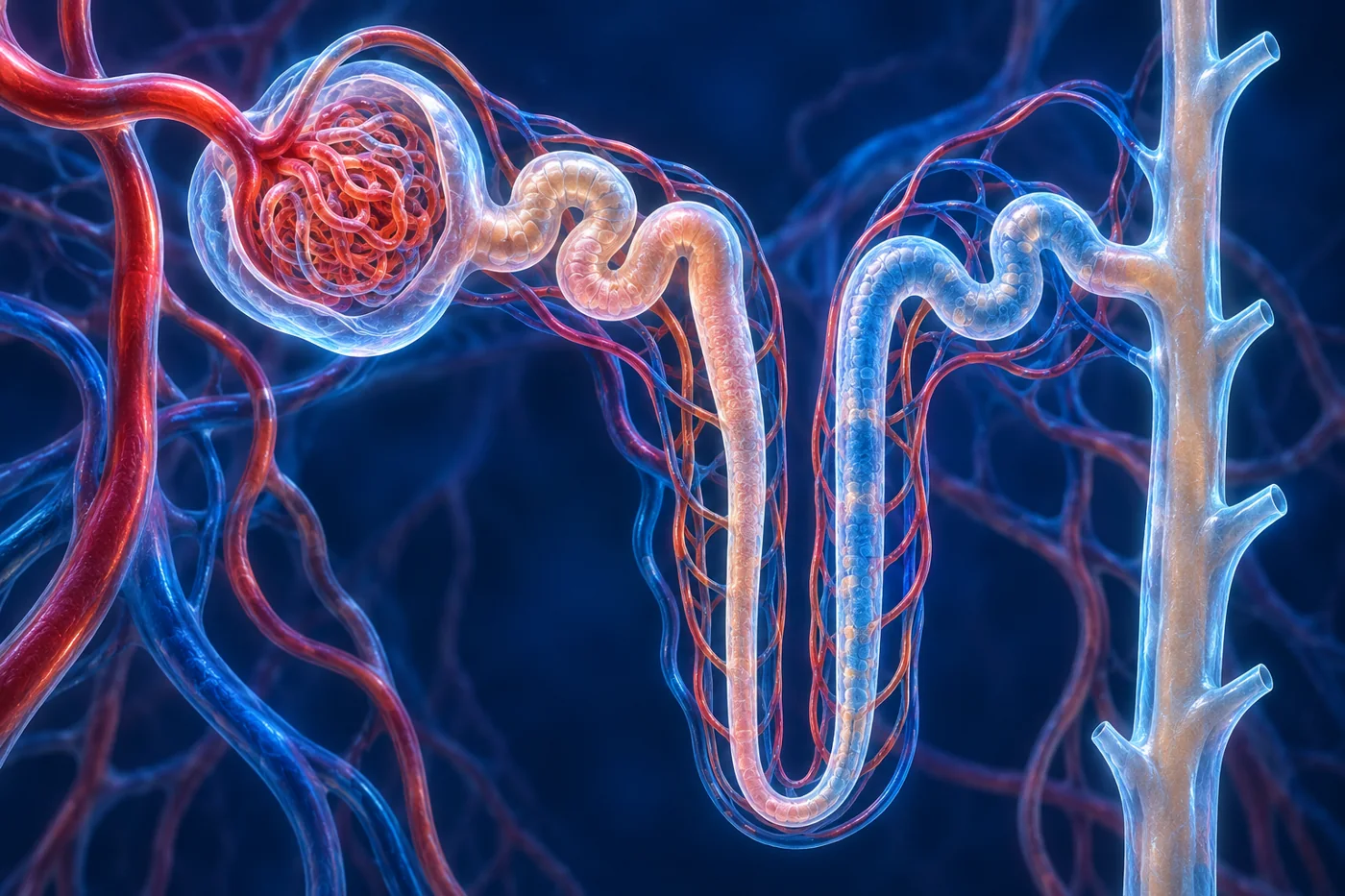
The nephron, segment by segment
Transporters, hormones and the diuretic that targets each segment.
Notes9 min readAcid–base in five steps
A structured way through any blood gas.
Notes8 min readGlomerular disease: nephritic or nephrotic?
Two presentations, a short list of causes for each, and the clues that separate them.